

NCX-CGC Partner to Develop Storage Capacity across Nigeria
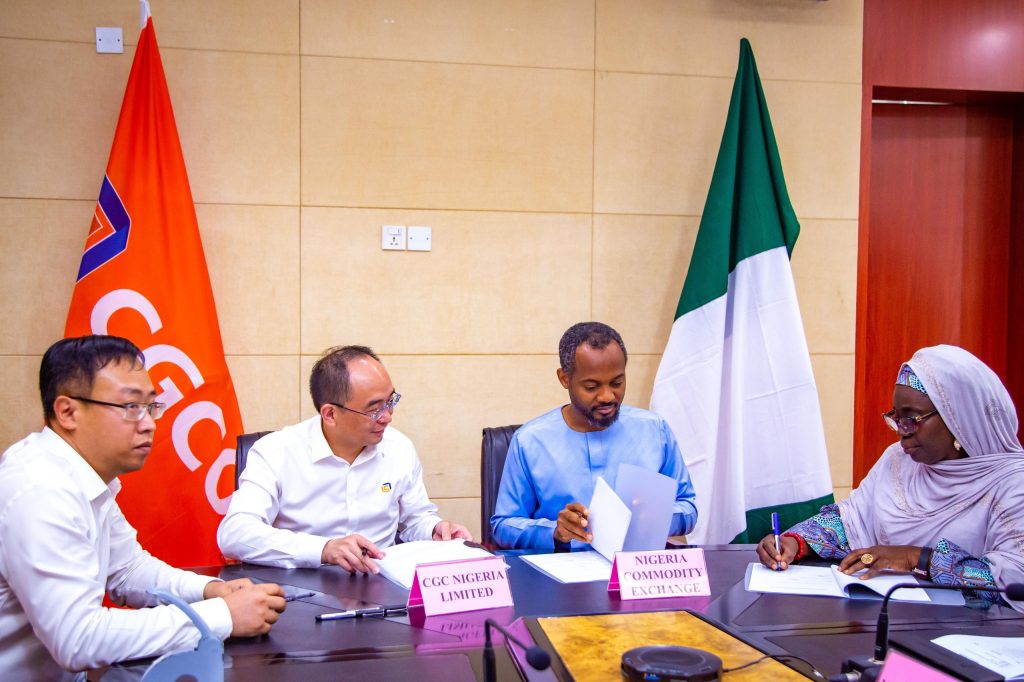
The Nigeria Commodity Exchange (NCX) and CGC Nigeria Limited have agreed to collaborate in expanding Nigeria’s storage capacity as a strong demonstration of mutual interest in developing the commodity trading ecosystem. NCX is currently in the early phase of implementing a strategic plan to revitalise the ecosystem through a model network of warehouses to support commodity trading. This aims to provide farmers with 500,000MT of accessible storage facilities while upholding business and environmental sustainability. This collaboration is captured by a Memorandum of Understanding signed by the Managing Director of NCX, Mr. Anthony A. Atuche, and the Group Managing Director of CGC, Mr. Zhong Xiang.
In line with the Renewed Hope Agenda of President Bola Ahmed Tinubu, this MOU commits both organisations to a vision to strengthen food security reiterated by the significant pledge of $50 billion in financial support by China at the recent Forum on China-Africa Cooperation (FOCAC). During his keynote speech at the FOCAC in September 2024, China’s President Xi Jinping highlighted the interest to “expand market access for African agricultural products, deepen cooperation” and the launch of a “China-Africa quality enhancement program.” As a major partner for Africa’s development, CGC has sustained its leadership in construction for over 40 years, bringing a strong capacity to this storage project for the benefit of millions of households across Nigeria.
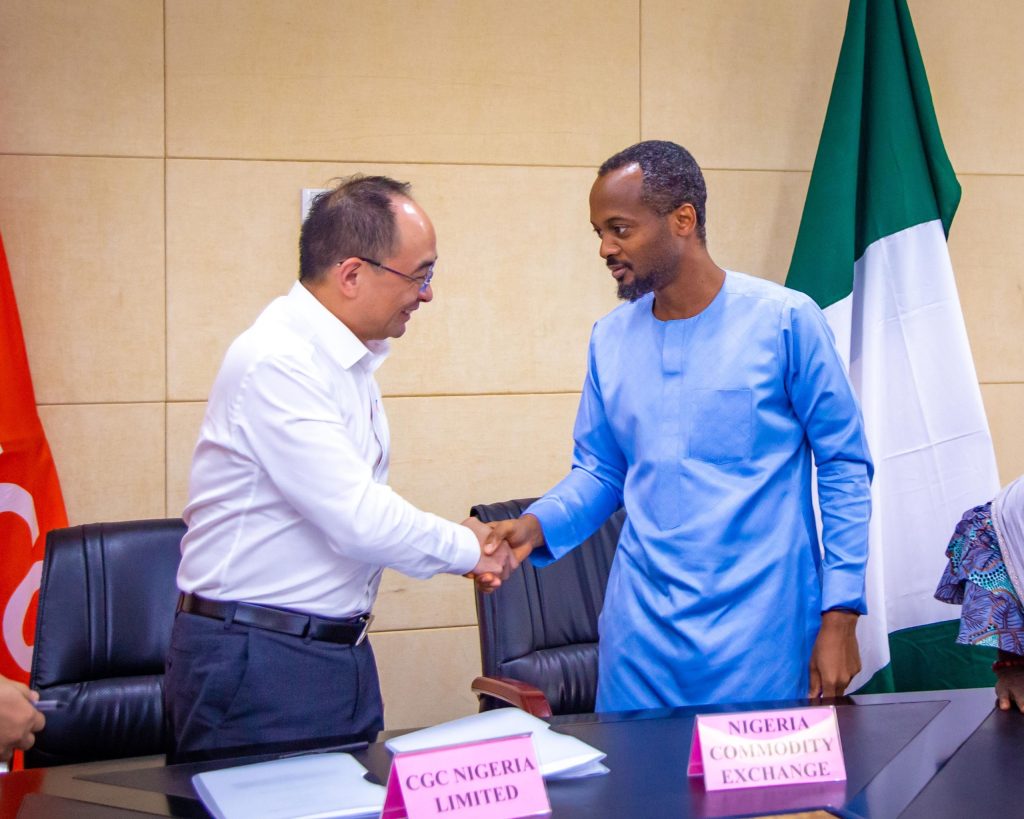
The relevance of this project is aligned to the Nigeria Commodity Exchange’s strategy to Revitalise the Ecosystem for Trading Commodities (RETRAC) with a focus on infrastructure which seeks to provide storage facilities to improve national capacity. The model facilities are to be built to integrate the following key components:
- Commodity-specific warehouses with long-term preservative features.
- Quality control facilities for sorting, assaying, drying and other services for value addition.
- Renewable energy technology for power generation.
In combination, these offer market participants the assurance of quantity and quality of key food and cash crops while prioritizing the urgency of climate change mitigation amidst prevailing business conditions. Ultimately, this will address challenges of post-harvest losses and usher in much-needed developments for a thriving commodity trading ecosystem that is reliant on a network of standardised, purpose-built warehouses. Commenting during the signing ceremony, Mr. Atuche noted that “this begins our journey to bring succour to smallholder farmers through engagement in the agricultural value chain to support Nigeria’s economic growth.”